
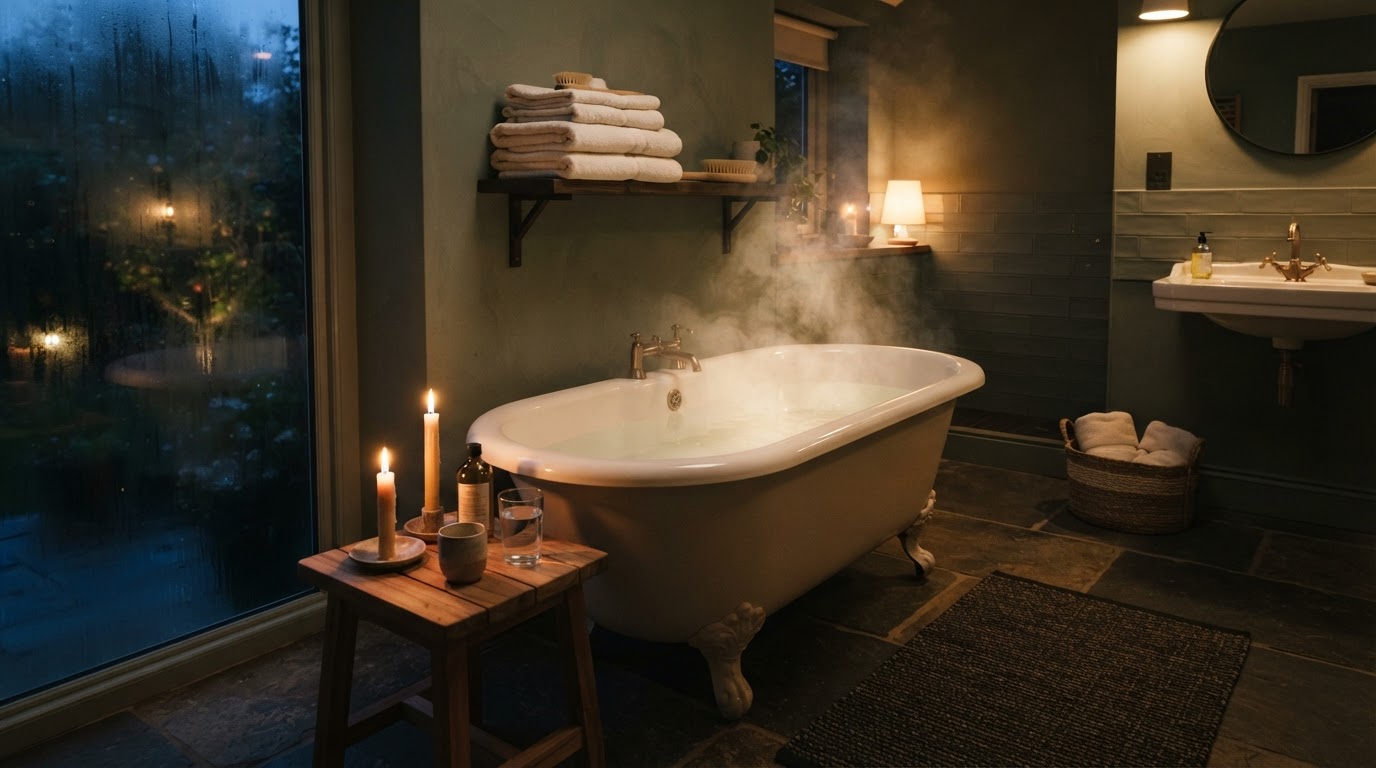
A warm bath or shower is one optional way to create a quieter transition at the end of the day. It may feel relaxing, but it does not guarantee that you will fall asleep faster.
What the guidance says
CDC guidance for workers dealing with sleep challenges notes that a warm bath before bed may promote relaxation. The National Institute on Aging also lists a warm bath as one example of a relaxing bedtime activity. These are general suggestions, not a treatment for insomnia.
Choose a time that feels comfortable
The CDC’s NIOSH guidance describes taking a warm bath roughly 30 minutes to two hours before bedtime as an option. You do not need to follow an exact countdown. Leave enough time to dry off, get comfortable, and finish any usual bedtime tasks.
Keep it simple and safe
Use a comfortably warm temperature rather than water that feels too hot. Keep the floor clear, use a non-slip surface if needed, and make sure getting in and out is safe for you. A short shower or washing your face may be a better fit if a bath feels inconvenient.
Notice whether it helps you unwind
Try the same simple routine on a few evenings and notice whether you feel more settled. If bathing makes you feel overheated, rushed, or more alert, stop using it as a bedtime cue. A warm drink without caffeine, quiet music, or another activity may suit you better.
Remember that sleep has many influences
A bath is only one small part of an evening. Regular schedules, light, noise, medication, stress, and health conditions can also affect sleep. If difficulties persist or interfere with daily life, seek advice from a healthcare professional.
Choose the version that fits your evening
A warm bath is not a required part of a bedtime routine. A shower, washing your face, changing into comfortable clothes, or simply sitting quietly may suit you better. Think about the practical details: how much time you have, whether the bathroom is comfortable, whether you share the space, and whether a bath makes you feel relaxed or rushed.
If you enjoy bathing, prepare a towel and clear the floor before turning on the water. Choose a temperature that feels comfortably warm to you, and allow enough time to dry off and get ready without watching a strict countdown. If you find yourself hurrying through the rest of the evening to fit in a bath, the routine may be adding pressure instead of reducing it.
Make the bathroom comfortable and safe
Water, tile, and low light can make a bathroom slippery. Keep the path clear, use a non-slip mat if needed, and make sure that you can get in and out safely. If you have a condition or medication that affects balance, blood pressure, or heat tolerance, ask a healthcare professional what is safe for you. Do not make the water hotter to try to force a stronger effect.
A shower can be a practical alternative when a bath is inconvenient, when conserving water matters, or when getting in and out of a tub is difficult. There is no need to stay in hot water for a particular length of time. Stop if you feel overheated, lightheaded, uncomfortable, or unwell, and follow local emergency guidance if symptoms are severe.
Keep the rest of the routine simple
Some people enjoy pairing a bath with a quiet activity afterward, such as setting out clothes for the morning or reading a few pages. Keep this optional. If the bathroom routine already takes time, do not add several new tasks at once. Pick one cue that helps you move toward bed, then allow the evening to be ordinary. A routine is more likely to fit real life when it does not depend on special products or perfect timing.
Notice the full experience rather than focusing only on whether you fell asleep fast. Did you feel less rushed? Did the bathroom feel too warm? Did the activity interfere with a family schedule? A short note after a few evenings can help you decide whether to keep, change, or skip it. Avoid interpreting one night as proof that a bath caused a particular sleep result.
If the idea does not work for you
There is no need to continue an activity that makes you feel hot, hurried, or uncomfortable. Try a shorter shower, a different time, or another quiet activity—or leave the routine out altogether. Sleep is influenced by many things, including schedules, light, noise, stress, health, and medication. A bath is one possible comfort choice, not a cure or a substitute for medical advice.
If sleep problems happen often, interfere with work or daily life, or come with symptoms that concern you, speak with a qualified healthcare professional. Be specific about what you experience and how long it has been happening. A professional can help consider factors that a general article cannot assess. Do not stop prescribed medication or change treatment based on bedtime tips.
Quick questions
Does the bath have to be right before bed? No exact schedule is required. Public guidance describes a warm bath as one possible relaxing activity; choose timing that gives you enough room to finish calmly.
What if I do not have a bathtub? A comfortable shower or another quiet transition is fine. Buying equipment is not necessary.
Should I do it every night? Only if it fits your time, comfort, and safety. A routine can be flexible, and skipping it does not mean you have failed.
Keep a bath safe, simple, and comfortable
Use a temperature and duration that feel comfortable, and leave enough time to dry off and get ready for bed without rushing. If you feel light-headed, unwell, or uncomfortable, get out carefully and seek help if needed. Avoid locking yourself away if a health or safety need means someone should be able to check on you. A shower or another quiet activity can be an alternative if a bath is inconvenient.
People with mobility limitations can use appropriate supports and should avoid unsafe transfers. Follow medical advice about bathing if you have a condition affected by heat. The aim is comfort and a pleasant transition; a bath is optional and not a guaranteed way to fall asleep.
Sources
General educational information only, not diagnosis or treatment. Read our health disclaimer.