
A comfortable reading place can be made from everyday furniture and a little thoughtful setup.
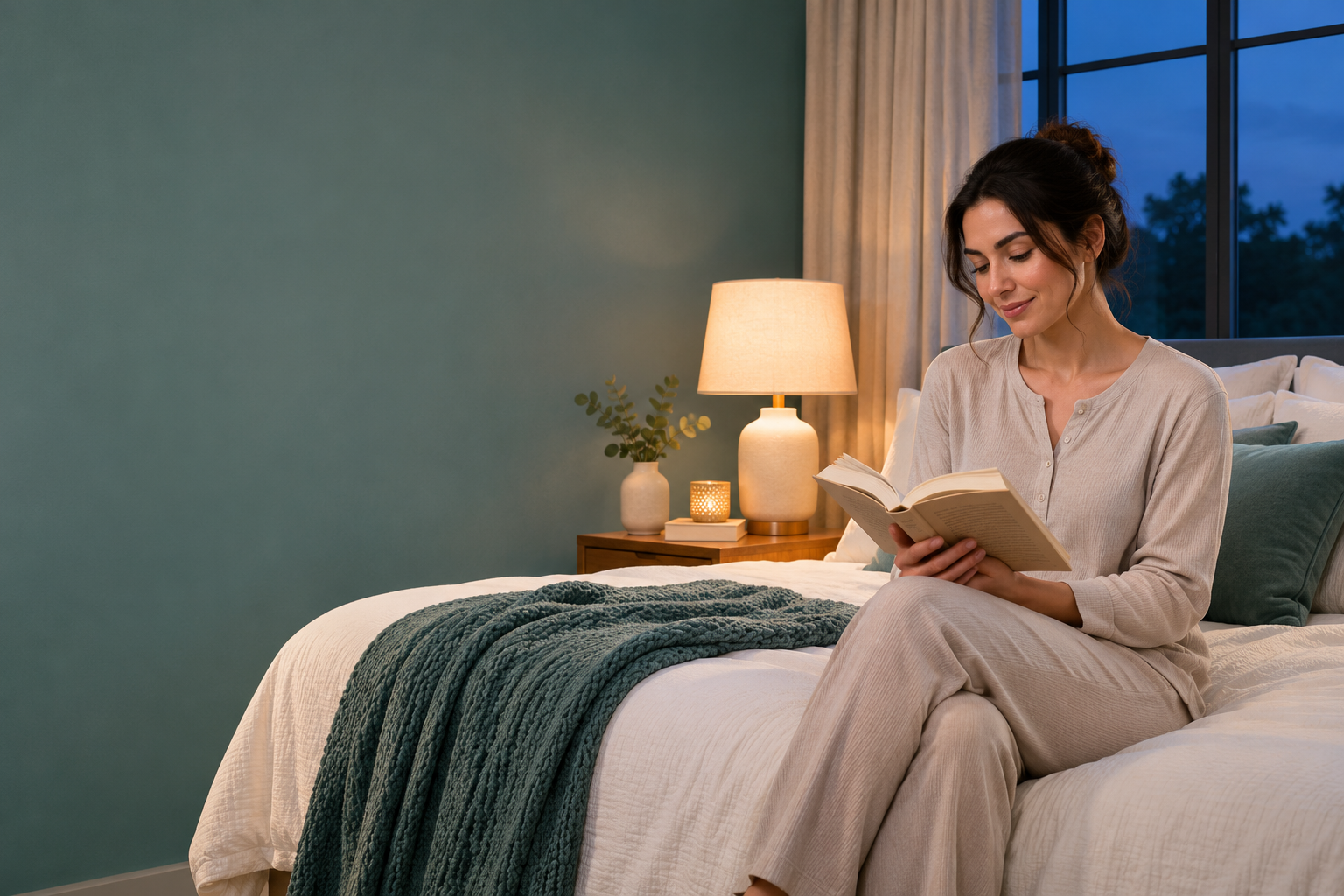
Choose a spot you already use
Look for a place with enough room to sit comfortably and get up safely. A chair, couch corner, or spot at the end of the bed may work. If the bedroom is crowded, a quiet place in another room can still be part of an evening routine.
Make the light comfortable
Place a lamp where you can read without leaning or squinting. If you share the space, choose a light that will not bother others. Keep cords out of walking paths and make sure you can move safely if you get up after dark.
Keep only a few useful things nearby
A book, bookmark, reading glasses, and a small table or basket may be enough. A throw blanket can make the seat more comfortable if you already own one. Avoid adding items simply because a photo of a reading nook includes them.
Make it easy to return to
Leave your current book where you can reach it and use a bookmark to save your place. Put away devices or turn on Focus mode if notifications pull your attention away. If you use an e-reader, adjust its brightness before you sit down.
Use the corner for a short pause
The National Heart, Lung, and Blood Institute lists reading among the quiet activities that may be part of a wind-down routine. Try a few pages, then stop when you want. Reading is one option, not a necessary condition for sleep.
Keep the space personal
A reading spot should work for the people who use it. Some prefer quiet; others enjoy soft background audio. Adapt the setup to the room, household, and mobility needs rather than following a one-size-fits-all design.
Build a reading corner with what you already have
A reading corner does not need a dedicated chair or a renovation. Start with a spot that is already comfortable and safe to reach: the end of a sofa, a firm pillow beside the bed, or a chair near a window. Clear enough space to sit down and stand up without moving several objects each time. If the room is shared, a small basket or shelf can keep the few items together and make them easy to put away.
Notice what makes you return to a place. You may want a back support, a footrest, a surface for a cup, or a warm layer nearby. Use items you own before buying anything. A pile of cushions that shifts around or a side table in a walkway can make the corner less useful, so choose a setup that suits your body and the room. People with mobility, pain, or balance concerns should prioritize a clear path and a stable seat over a particular style.
Place light where the pages are
Reading is easier when the page is visible without a harsh beam shining into your eyes or toward someone else. Try the existing lamp from your usual seated position. If the page is shadowed, adjust the angle or move the seat slightly before adding equipment. A clip light or small lamp can help when it is safe, stable, and suited to the space, but it is optional. Keep cords away from walking paths and do not cover a lamp with fabric.
Think about how the light affects other people. A directed reading light may be considerate in a shared bedroom, while a brighter room light may work better in a common area. During the day, use available daylight if it is comfortable for your eyes. At night, choose a level that lets you read easily and still feels relaxing. There is no one brightness that suits every person or book.
Make the corner easy to begin and easy to leave
Keep the current book or reading device in the same reachable place. You might put a bookmark, glasses, or a charger nearby if you use them. Avoid storing so many choices there that selecting a book turns into another task. One or two options are enough. If you find yourself rereading the same paragraph, feeling restless, or becoming frustrated, close the book and switch to another quiet activity. The corner should be an invitation, not a rule.
Choose a natural stopping point before you begin: the end of a chapter, a few pages, or simply the moment you start to feel sleepy. There is no need to finish a chapter if it keeps you alert. If a book is gripping or upsetting, save it for another time and pick something gentler. The purpose is to enjoy a quiet transition and make the bedroom or sitting area feel comfortable, not to use reading as a guaranteed sleep treatment.
Work around limited space and shared routines
In a small home, a reading spot may need to serve more than one purpose. A folding cushion or a basket can be put away after use. If family members use the same room, agree on a simple way to return objects and keep the path clear. In a dorm or shared apartment, headphones are not necessary for silent reading; a low-distraction time and a compact light may be enough. Consider what is realistic for the people around you.
Try the arrangement for a few evenings, then make one adjustment at a time. If you never sit in the spot, ask whether it is too bright, uncomfortable, hard to reach, or simply not convenient. You can change the location or abandon the idea. A reading corner is useful only if it fits daily life. A chair already used for another relaxing activity may be a better choice than setting up a separate area.
Common questions about a reading corner
Do I need a chair? No. Choose a stable position that is comfortable and safe for you; a sofa or supported position in bed may work.
Should I always read in the bedroom? No. A living room chair or another quiet place may suit you better, particularly if you prefer to keep the bedroom for rest.
What if reading wakes me up? Stop and choose a different low-key activity. People respond differently, and reading is not a treatment for persistent insomnia.
How much time should I spend there? There is no required duration. A few pages or a short period can be enough to enjoy the habit.
Sources
General educational information only, not diagnosis or treatment. Read our health disclaimer.