
You do not have to remove every screen from your life to make the final part of the evening quieter.
What does screen-free mean for you?
For one person it may mean no social media after dinner; for another it may mean keeping the phone available for family calls but avoiding work email in bed. Define the specific habit you want to change. A narrow goal is easier to follow than a vague instruction to “use the phone less.”
Start with a small buffer
The CDC recommends turning off electronic devices at least 30 minutes before bedtime as one healthy sleep habit. If that is not realistic yet, begin with ten minutes and increase the buffer when it feels manageable. The goal is to create a predictable pause, not to guarantee a particular result.
Make the phone less inviting
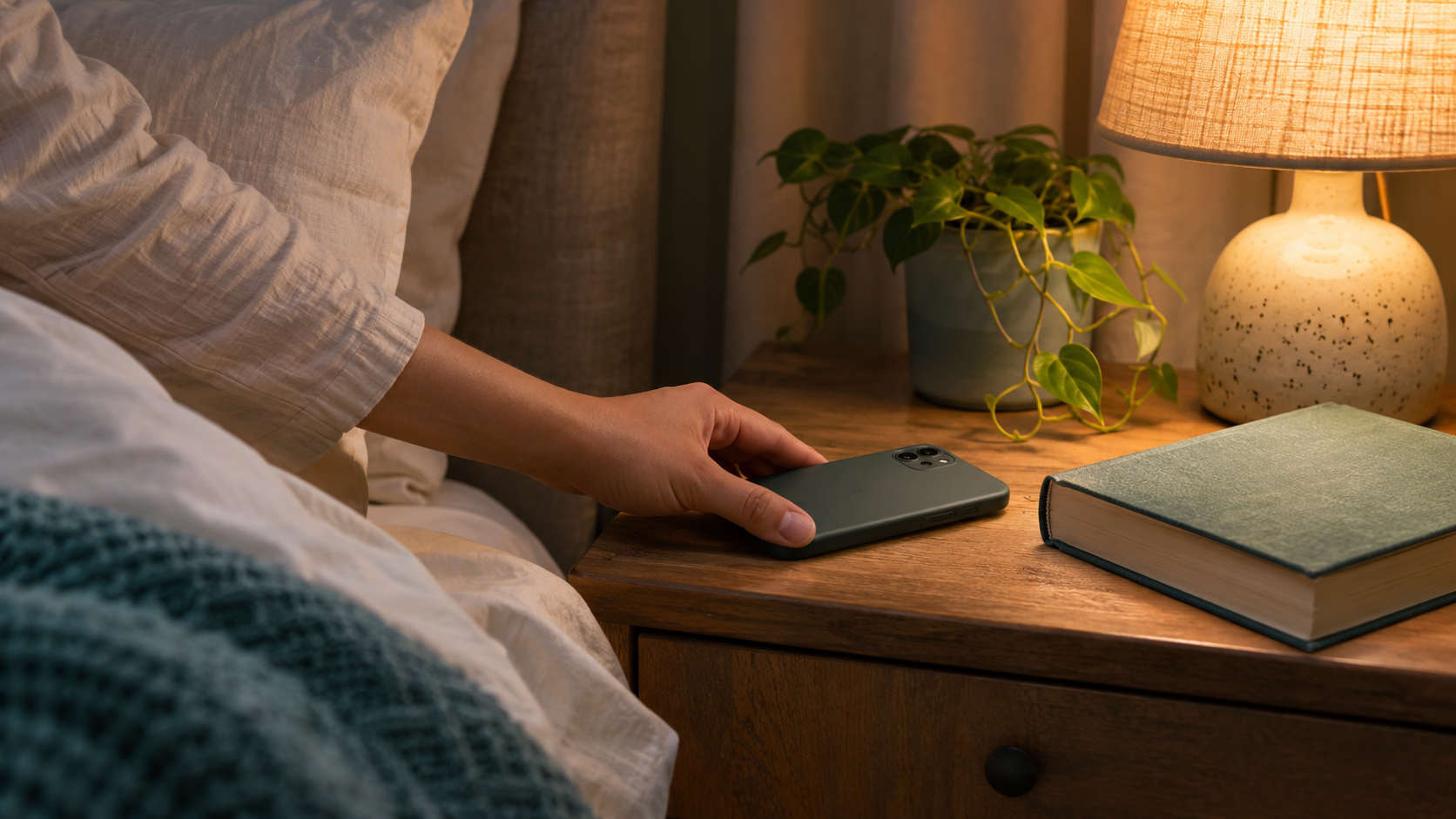
Silence nonessential notifications, move social apps off the home screen, or set a Focus schedule. Choose a charging spot that is not within arm’s reach of your pillow if that works for your room. Keep essential contacts and emergency access available when you need them.
Decide what will replace scrolling
A screen break is easier when there is something simple to do instead. Put a paper book, puzzle, sketchbook, or headphones nearby. You can also prepare clothes for tomorrow or listen to audio with the screen locked. Pick one option rather than planning a whole evening program.
If you need to stay available
Caregivers, parents, on-call workers, and people with unpredictable schedules may not be able to switch off completely. Allow calls from selected contacts, use a separate alarm if helpful, and mute the apps that do not need to interrupt you. A realistic boundary is more useful than a rule that makes you feel unsafe.
Review the plan after a few days
Notice whether the change reduced unwanted interruptions or made evenings feel more settled. If it created stress or interfered with necessary communication, adjust it. The phone may not be the only influence on sleep; persistent difficulty is a good reason to seek individualized guidance.
Sources
General educational information only, not diagnosis or treatment. Read our health disclaimer.