
A book can be a pleasant alternative to one more round of scrolling, but it should remain an invitation rather than a sleep prescription.
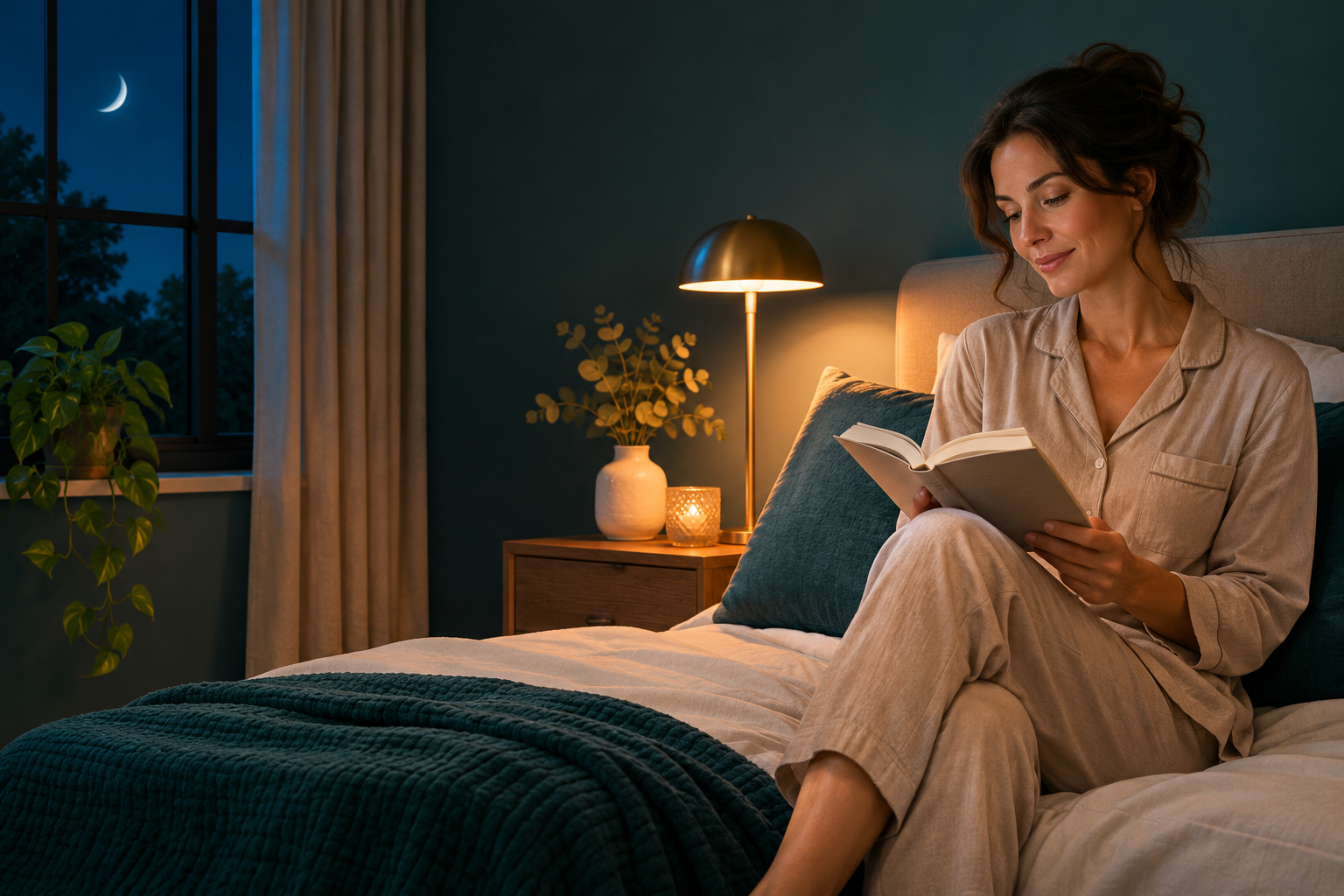
Start with a book you actually want to open
A bedtime book does not have to be serious, educational, or especially calming. Choose a familiar novel, short stories, a magazine, or a few pages of something you already enjoy. If a suspenseful chapter leaves you eager to keep going, choose a stopping point before you begin or switch to something less absorbing.
Set up light that feels comfortable
Use a lamp that lets you read without straining, then lower other lights if that feels pleasant. Comfort matters more than copying a particular room setup. If you use an e-reader, adjust its brightness and notifications to suit you; a quieter screen setting does not guarantee that device use has no effect on your evening.
Choose a stopping point before you start
Decide on a small amount, such as ten minutes or one chapter. A clear endpoint makes it easier to keep reading enjoyable instead of looking at the clock and calculating how much sleep is left. If you are tired sooner, close the book. If you are still enjoying it and your schedule allows, you can continue.
Keep the book within reach
Leave your current book beside a chair or on a nightstand, and use a bookmark so you do not have to search for your place. A paper copy can make it easier to avoid messages and other apps. If you prefer an e-reader, set it up before getting into bed so you are not browsing for titles at the last minute.
Let reading be one option, not a requirement
The National Heart, Lung, and Blood Institute lists reading as one example of a relaxing activity before bed. That does not mean reading works for everyone or that it treats insomnia. If it feels frustrating, choose a different low-key activity such as quiet music or a simple stretch.
When reading turns into pressure
If you find yourself judging the night by how quickly you feel sleepy, pause and make the goal smaller: enjoy a few pages, then stop when you want. People who regularly struggle to fall asleep or stay asleep may need more than a bedtime habit, so consider professional advice.
Sources
General educational information only, not diagnosis or treatment. Read our health disclaimer.