
A phone can be an alarm clock, a way to contact family, and a source of entertainment. It can also bring bright light, alerts, and attention-grabbing content into the final part of the evening. If phone use seems to keep you engaged later than you want, a few settings may help you create a clearer stopping point.
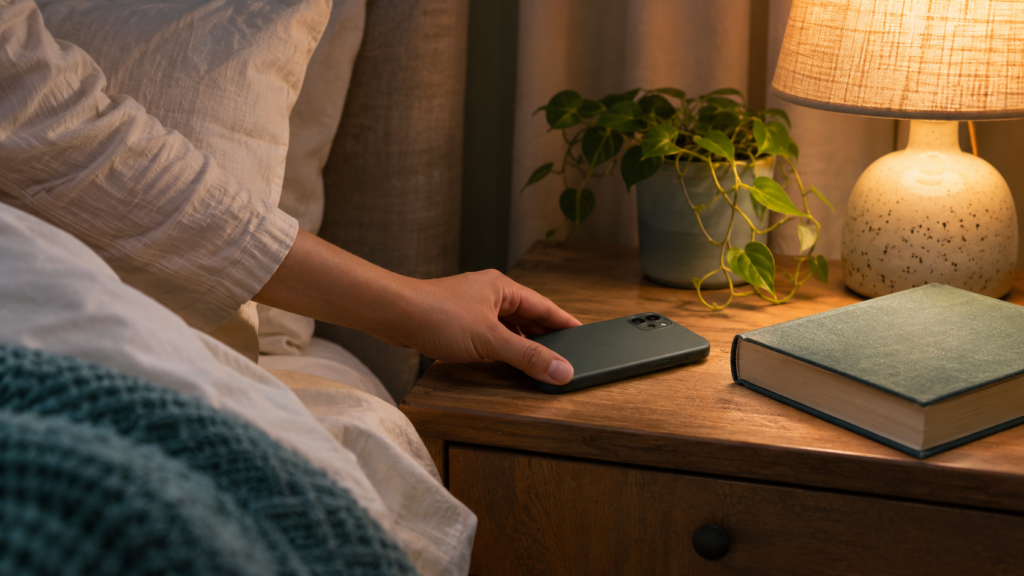
What can make bedtime scrolling disruptive?
There is more than one factor. A screen can add light, while a message or video can keep your attention active. The bigger issue for many people may be that time passes unnoticed. CDC guidance recommends turning off electronic devices at least 30 minutes before bedtime as one healthy sleep habit. That is a practical starting point, not a guarantee that every person will sleep better.
Try a lower-friction plan
Silence nonessential notifications
Use Do Not Disturb, Focus, or a similar setting to quiet shopping, social, and work alerts. Allow important contacts through if you need to remain reachable.
Choose a stopping cue
Set a simple limit before opening an app: one episode, one message check, or a chosen time. Use a timer if you often lose track. A cue is more useful when it is realistic than when it is strict and quickly abandoned.
Make the screen less stimulating
Lower the brightness, enable a warmer display setting if comfortable, and avoid work discussions or upsetting content right before bed. These changes do not remove all screen effects, but they may make use feel less intense.
Charge the phone away from the pillow
If reaching for the phone leads to more scrolling, place it across the room or outside the bedroom. Keep it nearby if you rely on it for emergency contact or an alarm; a Do Not Disturb schedule can be a useful middle ground.
If you need your phone for work or care
Some people need to stay available for caregiving, shift work, or urgent calls. You do not need to copy someone else’s rule. Use exceptions for essential contacts, reduce other alerts, and consider a separate alarm if that helps.
Try the smallest change first
Pick one setting for a few nights, such as silencing nonessential alerts or charging the phone away from the bed. Notice whether it changes the way your evening feels. If it makes you anxious or less safe, adjust the plan. A healthy routine should fit your circumstances.
If sleep trouble continues frequently, phone habits may not be the only factor. A healthcare professional can help explore other possible causes.
Sources
General educational information only, not diagnosis or treatment. Read our health disclaimer.